
Farming cooperative, Manta
Food security and economic independence through collective farming and progressive mechanisation.

In the village of Manta, in the municipality of Boukombe in north‑western Benin, agriculture represents the main source of livelihood for the local population. Families cultivate small plots of land using traditional tools and limited resources, in a context that is highly dependent on climatic conditions. The scarcity of mechanical equipment, limited access to fertilizers, and the absence of infrastructure for storing and marketing products make agricultural production unstable and poorly profitable.
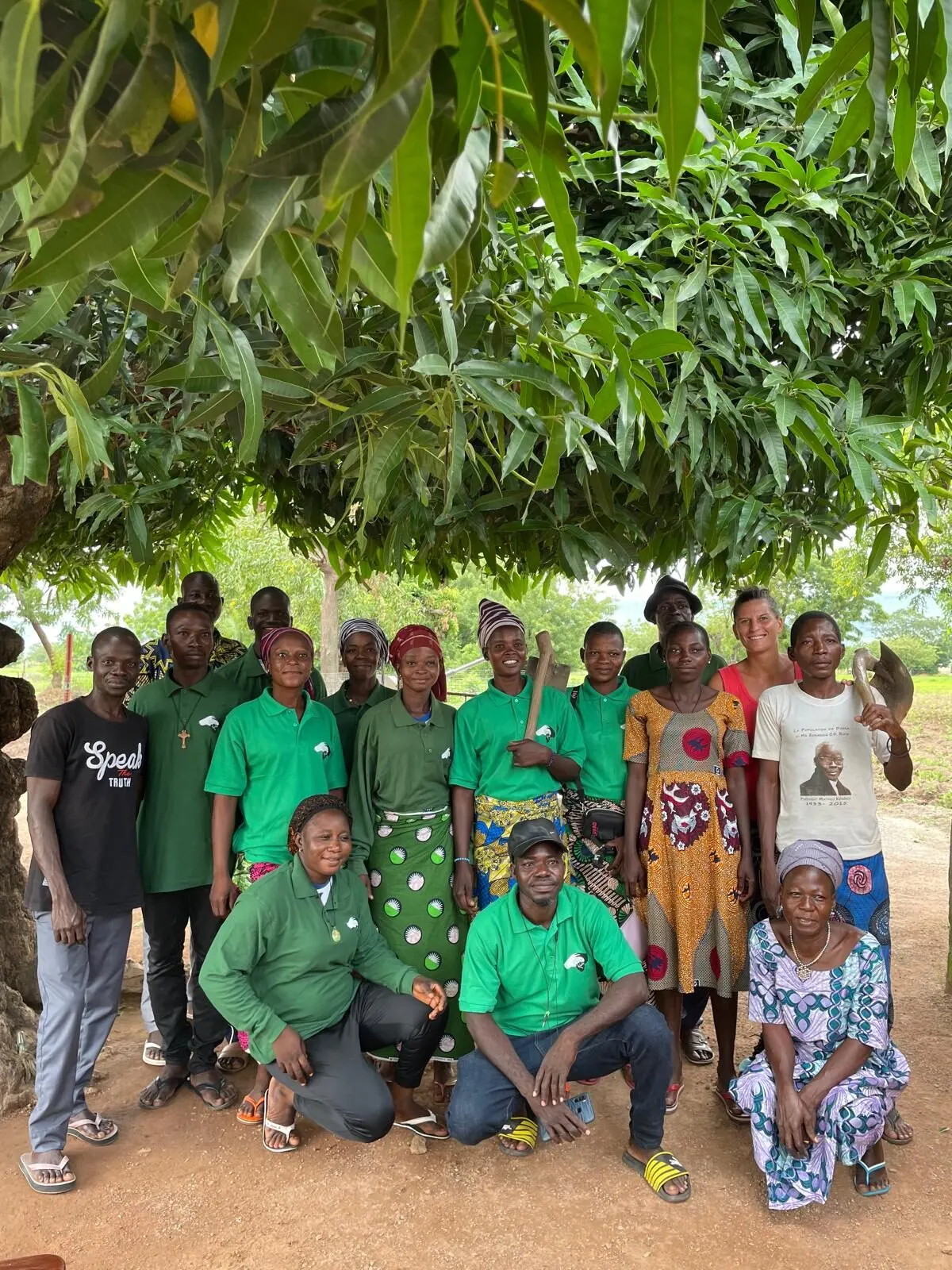
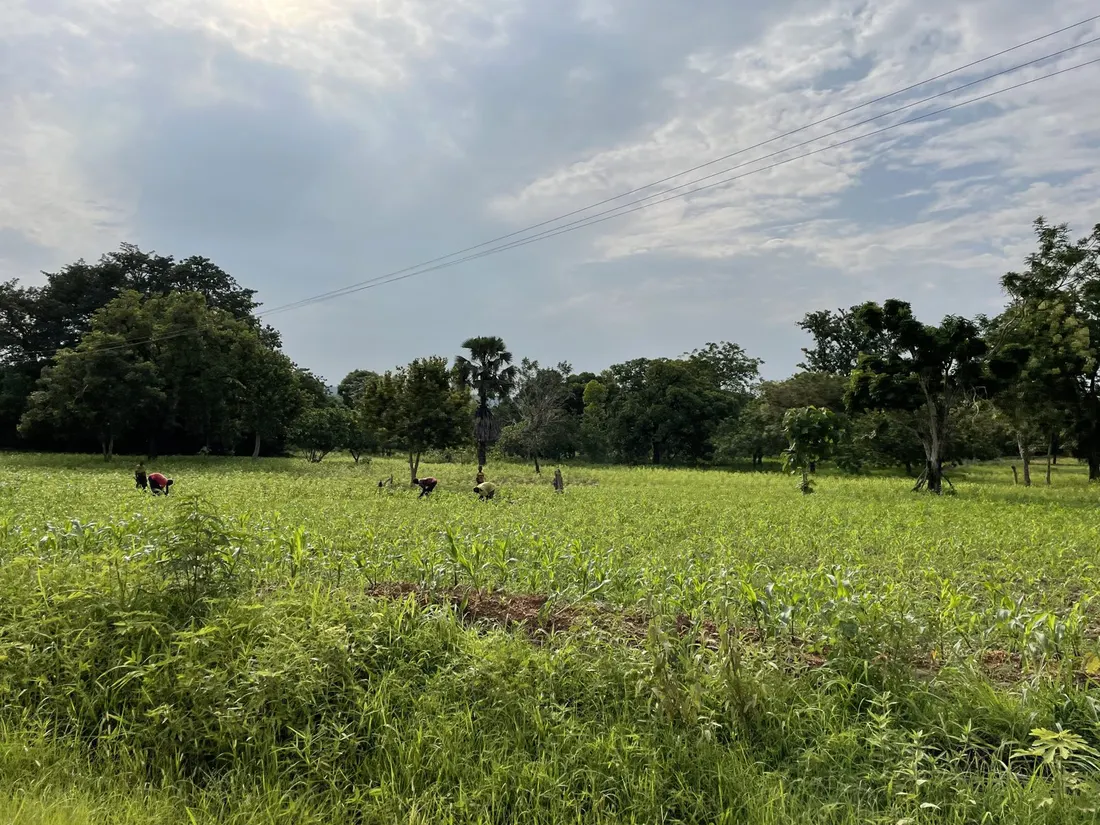
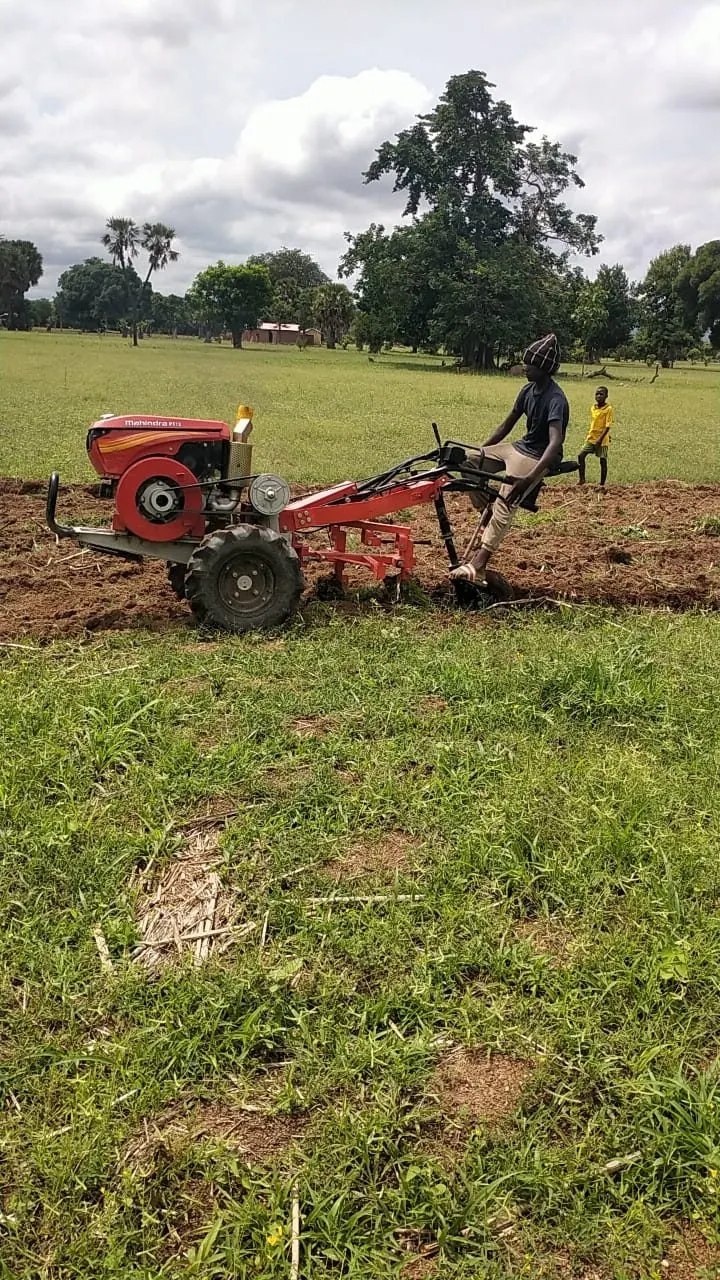 It is in this context that, in June 2023, the NGO ANAN launched an agricultural cooperation project in the village, with the aim of strengthening food security and improving working conditions through collaboration among families. The project took shape with the creation of an agricultural cooperative, initially made up of five households, who chose to join forces to make farming activities more efficient, organized, and sustainable over time.
The cooperative’s development is conceived as a gradual process: from the provision of basic tools and resources, to the strengthening of collective work and mutual support, and eventually to the progressive introduction of agricultural mechanization. This process aims to reduce physical labor, improve yields, and build a structure capable of sustaining itself independently.
In 2023, the cooperative cultivated a total of five hectares of land, using fertilizer provided by the NGO ANAN. From the outset, a cooperative work system was introduced, in which each member participated in cultivating the fields of others and contributed two sacks of their own harvest to the cooperative, creating an initial form of common reserve.
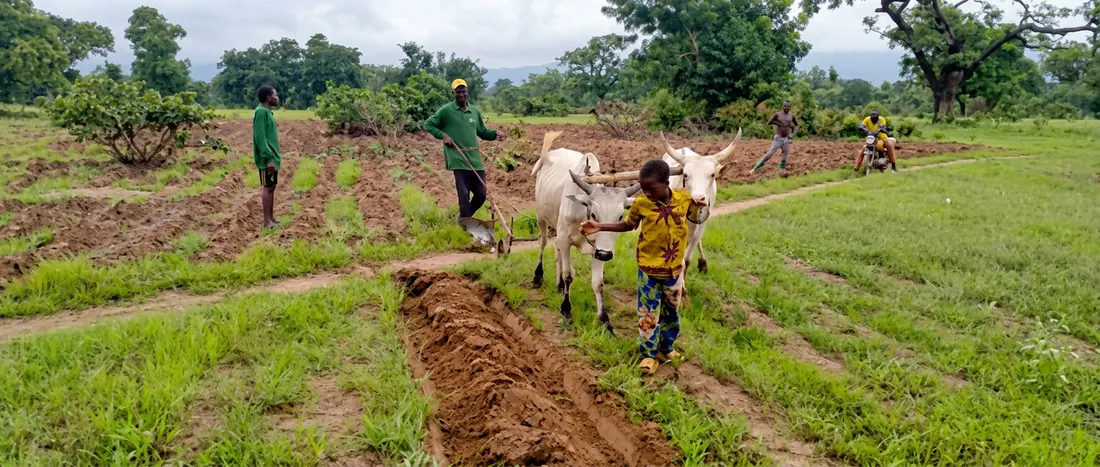
During 2024, the project made significant progress with the purchase of four oxen and two ploughs, made available to the members. Each household received three sacks of fertilizer, while collective work continued according to the methods already tested. A common fund was also established, financed by a symbolic fee for the use of the ploughs and oxen, alongside a service‑for‑hire system that allows people outside the cooperative to use the equipment. The proceeds are reinvested in the cooperative’s growth. In the same year, the cereals produced during the 2023 farming season were sold.
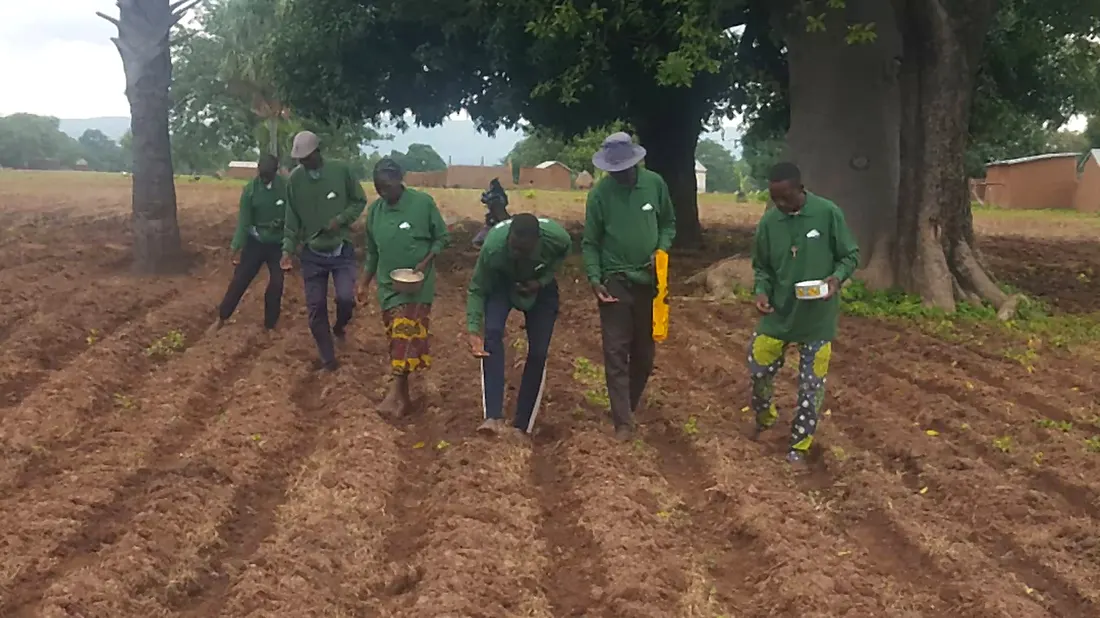
In 2025, the cooperative expanded to include 35 members. The NGO ANAN provided the cooperative with a 12‑horsepower tiller, which further facilitated field work. In this case as well, a preferential pricing system for members and a service‑for‑hire mechanism were introduced, with the aim of continuing to strengthen the common fund and support the project’s economic autonomy.
Looking ahead, starting in 2026 the project plans to expand the cooperative to at least forty members, build a warehouse for cereal storage , which will also serve as a shelter for agricultural equipment , and purchase a 60‑horsepower tractor to further increase productivity and reduce manual labor. Training activities on the use and maintenance of machinery are also planned, along with the extension of preferential pricing and service‑for‑hire systems to the tractor, and the legal formalization of the cooperative to ensure its institutional recognition by the Government of Benin.
«A circular-economy model where part of the harvest feeds a common fund, reinvested in infrastructure, equipment and training.»
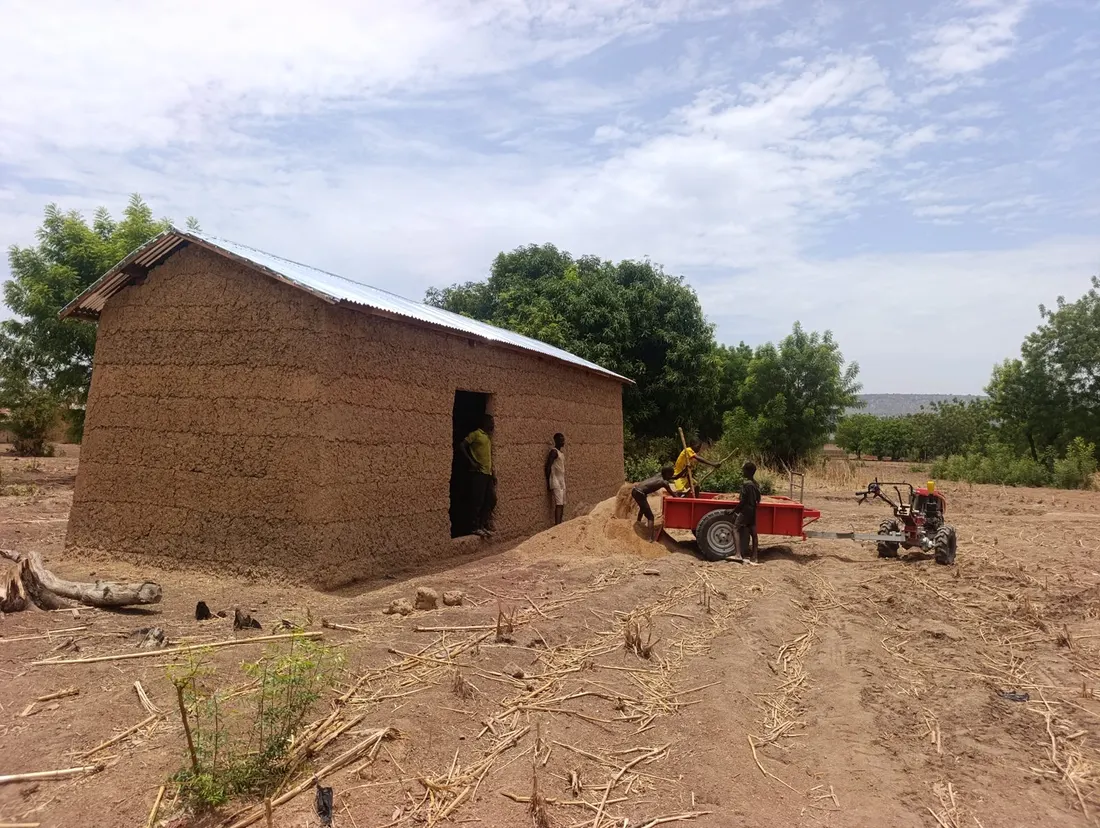 The project is based on a circular economy model, in which part of the harvest is allocated to the cooperative and sold to generate financial resources to be reinvested in infrastructure, equipment, and training. The gradual introduction of mechanization makes it possible to improve productivity and make agricultural work more sustainable, while at the same time strengthening the community’s food security.
Today, the ANAN cooperative represents a concrete path toward greater agricultural autonomy for the village of Manta and a cooperative model that can be replicated in other rural communities in Benin. The NGO ANAN continues to support this process through targeted investments, fostering the cooperative’s growth and self‑sufficiency over the long term.
With us
Our partners
Support this project
Every contribution, even a small one, helps us carry this work forward.